



|
|
ISSN 3105-6628(Print)
|
| 杂志简介 | 更多... |
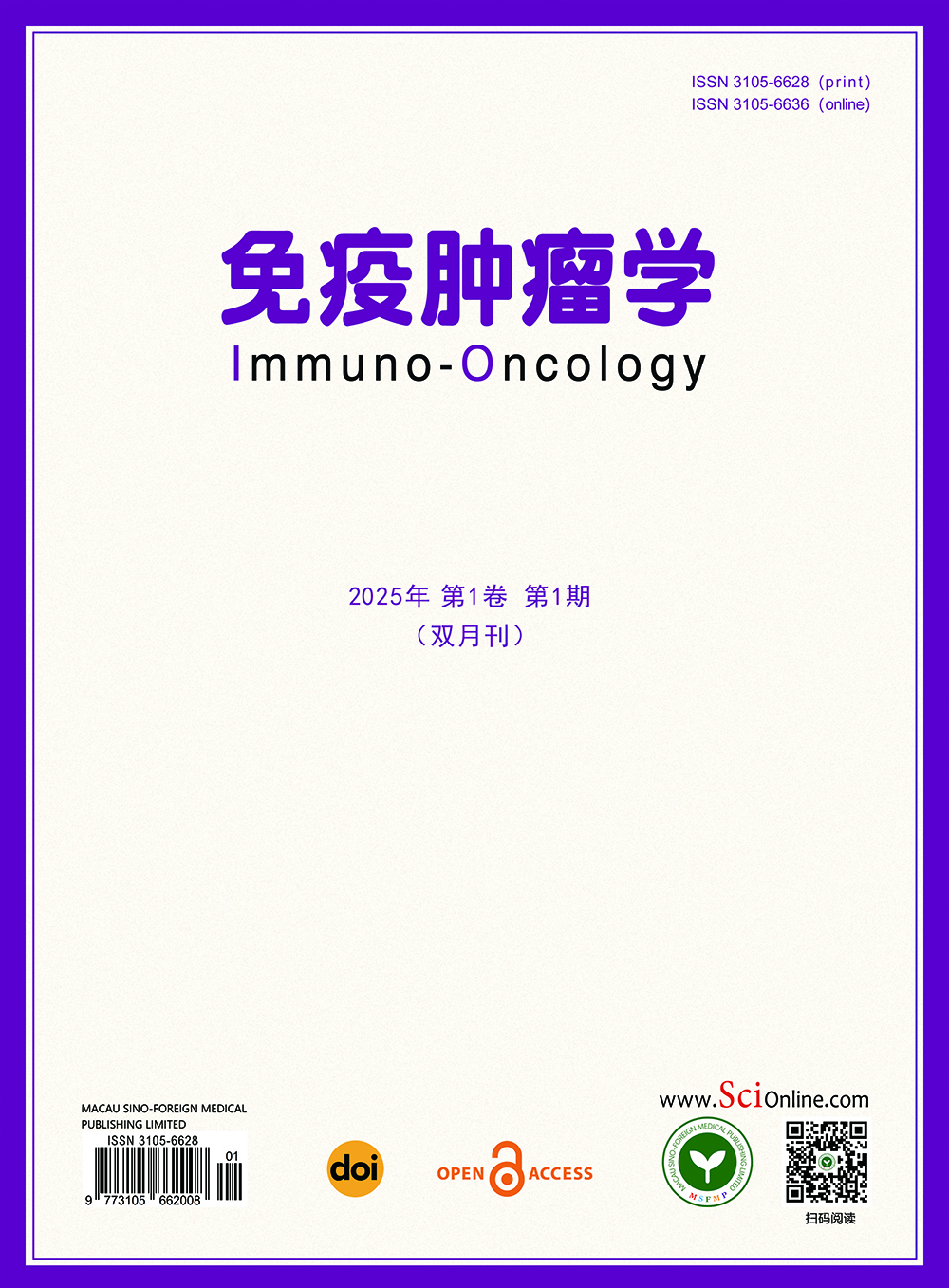
中文刊名:《免疫肿瘤学》
英文刊名:Immuno-Oncology
国际刊号:ISSN 3105-6628(印刷版)/ ISSN 3105-6636(网络版)
出版模式:金色开放获取(Gold OA),适用CC BY 4.0协议(全文永久免费)
出版机构:Macau Sino-Foreign Medical Publishing Limited
出版频率:双月刊
投稿语言:中文(需附英文标题、摘要、关键词、作者单位及姓名)
核心定位
《免疫肿瘤学》是一本聚焦肿瘤免疫学基础研究与临床转化的前沿学术期刊。本刊致力于推动肿瘤免疫治疗领域的创新突破,重点探索免疫检查点机制、肿瘤微环境调控、细胞治疗技术及生物标志物开发等关键科学问题。我们特别鼓励采用多学科交叉的研究方法,整合免疫学、肿瘤学、分子生物学及生物信息学等领域的前沿技术,为肿瘤免疫治疗的临床实践提供坚实的理论依据和创新策略。
约稿范围
本刊欢迎以下研究方向的投稿:
免疫检查点抑制剂的作用机制与耐药研究
CAR-T/NK/TCR-T等细胞治疗技术的创新与应用
肿瘤免疫微环境的动态调控机制
肿瘤新生抗原与个体化免疫治疗
免疫治疗生物标志物的发现与验证
免疫治疗相关不良反应的机制与管理
肿瘤疫苗与联合治疗策略
微生物组与肿瘤免疫应答
放射治疗与免疫治疗的协同效应
免疫治疗临床试验与真实世界研究
全球诚邀编委/副主编/同行评议专家/主编
我们诚挚邀请全球免疫肿瘤学领域的专家学者加入我们的学术团队,共同推动学科发展。在线申请请访问:
http://tg.scionline2025.com/01/bw.asp
在线投稿
欢迎通过以下链接提交稿件:
http://tg.scionline2025.com/01/
目标与愿景
本刊旨在成为免疫肿瘤学领域的国际权威学术平台,促进基础研究向临床治疗的快速转化。我们致力于构建全球化的学术合作网络,为研究者、临床医师和产业专家提供高水平的交流平台,推动肿瘤免疫治疗的创新发展,造福全球患者。
全球数据索引计划
本刊为所有发表论文注册专属DOI标识,并正在申请纳入以下重要学术数据库:
Science Citation Index Expanded (SCIE)
MEDLINE/PubMed
Scopus
Embase
DOAJ (Directory of Open Access Journals)
Google Scholar
百度学术
万方数据
维普资讯
澳门虚拟图书馆
龙源期刊网
超星学术平台
长江文库
新华网学术中国
CNKI 中国知网
Immuno-Oncology Call for Papers
Journal Information
Journal Title (English): Immuno-Oncology
Journal Title (Chinese): 《免疫肿瘤学》
ISSN: 3105-6628 (print) / 3105-6636 (online)
Publishing Model: Gold Open Access (under CC BY 4.0 license)
Publisher: Macau Sino-Foreign Medical Publishing Limited
Publication Frequency: Bimonthly
Language of Submission: Chinese (must include English title, abstract, keywords, and author affiliations/names)
Core Focus
Immuno-Oncology is a pioneering academic journal focusing on basic research and clinical translation in tumor immunology. The journal is dedicated to advancing innovative breakthroughs in the field of cancer immunotherapy, with particular emphasis on exploring key scientific issues including immune checkpoint mechanisms, tumor microenvironment regulation, cell therapy technologies, and biomarker development. We particularly encourage multidisciplinary research approaches that integrate cutting-edge technologies from immunology, oncology, molecular biology, and bioinformatics to provide solid theoretical foundations and innovative strategies for clinical practice in cancer immunotherapy.
Scope
We welcome submissions in the following areas:
Mechanisms of Immune Checkpoint Inhibitors and Resistance Studies
Innovation and Application of Cell Therapy Technologies (CAR-T/NK/TCR-T, etc.)
Dynamic Regulation Mechanisms of Tumor Immune Microenvironment
Tumor Neoantigens and Personalized Immunotherapy
Discovery and Validation of Immunotherapy Biomarkers
Mechanisms and Management of Immune-Related Adverse Events
Cancer Vaccines and Combination Therapy Strategies
Microbiome and Tumor Immune Responses
Synergistic Effects of Radiotherapy and Immunotherapy
Clinical Trials and Real-World Evidence in Immunotherapy
Global Call for Editorial Board Members/Associate Editors/Peer Reviewers/Editor-in-Chief
We cordially invite experts and scholars in the field of immuno-oncology worldwide to join our academic team and collectively advance disciplinary development. Apply online at:
http://tg.scionline2025.com/01/bw.asp
Online Submission
Please submit your manuscripts via:
http://tg.scionline2025.com/01/
Aims and Vision
Our goal is to establish Immuno-Oncology as an internationally authoritative academic platform in the field, promoting the rapid translation of basic research into clinical therapy. We are committed to building a global academic collaboration network, providing researchers, clinicians, and industry experts with a high-level exchange platform, driving innovation in cancer immunotherapy, and benefiting patients worldwide.
Global Indexing Plan
The journal registers unique DOI identifiers for all published articles and is pursuing inclusion in the following major academic databases:
Science Citation Index Expanded (SCIE)
MEDLINE/PubMed
Scopus
Embase
DOAJ (Directory of Open Access Journals)
Google Scholar
Baidu Scholar
Wanfang Data
VIP Information
Macau Virtual Library
Longyuan Journal Network
Chaoxing Academic Platform
Yangtze River Database
Xinhuanet Academic China
CNKI (China National Knowledge Infrastructure)
| 往期阅览 | 更多... |



|
乳腺癌术后三平面技术乳房假体重建的临床效果分析
|
 |
|||||
|
||||||
| 杨晓娟 | ||||||
| 摘要:目的:探究三平面技术在乳腺癌根治术后乳房假体重建中的临床价值。方法:回顾性总结分析云南省肿瘤医院乳腺中心进行的46例乳腺癌根治性术后的乳房假体重建的病例,其中,三平面技术乳房假体植入24例,双平面技术乳房假体植入22例。结果:双平面技术组患者术后拔管平均时间为(8.2±1.5)d。三平面技术组术后拔管平均时间为(10.3±2.4)d(t=3.366,P=0.002)。三平面技术组乳房重建的客观评价优良率优于双平面技术组(79.17%vs50.00%,χ2=3.564,P=0.04)。术后随访1年期间,均未出现乳腺癌局部复发、远处转移和死亡的情况。结论:三平面技术利用人体自身组织包裹假体,降低了乳房假体重建的相关并发症,在患者的主观满意度和乳房的外观客观评价上要优于传统的双平面技术,同时节省了生物补片的昂贵费用,值得临床推广应用。 | ||||||
|
丹参酮ⅡA调控肠道微生物群抑制胃癌生长的实验研究
|
|
|||||
|
||||||
| 范敏 | ||||||
| 摘要:目的:探讨丹参酮ⅡA对胃癌异种移植小鼠肠道菌群失调的调控作用。方法:建立小鼠胃癌移植瘤模型,分对照组、TanⅡA高剂量组和TanⅡA+菌群失调组,比较各组肿瘤生长情。Westernblot法检测NF-κB的磷酸化及下游细胞因子IL-6和IL-1β的表达。结果:与对照组相比,丹参酮ⅡA抑制移植瘤生长,但肠道菌群失调状态部分阻断了丹参酮ⅡA的抗肿瘤作用。此外,肠道菌群失调消除了丹参酮ⅡA刺激的移植瘤小鼠中NF-κB信号的减少。结论:丹参酮ⅡA可能通过调节NF-κB信号影响肠道微生物群而抑制胃癌生长。 | ||||||
|
HER2阳性乳腺癌治疗中蒽环类药物应用的研究进展
|
|
|||||
|
||||||
| 董孟浩 | ||||||
| 摘要:蒽环类药物是乳腺癌治疗的基石之一,鉴于蒽环类药物令人担忧的心脏毒性限制以及抗人表皮生长因子受体2(humanepidermalgrowthfactorreceptor2,HER2)治疗药物的发展,导致蒽环类药物在HER2阳性乳腺癌新辅助和辅助治疗中的地位受到挑战。全文从HER2阳性乳腺癌新辅助和辅助治疗的临床研究中探讨蒽环类药物的“去留”作一综述。 | ||||||
|
同源重组修复缺陷与乳腺癌研究回顾及评述
|
|
|||||
|
||||||
| 张舒洁 | ||||||
| 摘要:合成致死是一种新型抗肿瘤方式,基于该理论开发的第一款DNA损伤药物PARP抑制剂与同源重组修复缺陷(homologousrecombinationrepairdeficiency,HRD)形成合成致死作用,在卵巢癌、前列腺癌中显示出突破性疗效。HRD形成除了与乳腺癌遗传易感基因BRCA1/2突变有关外,还与其他同源重组修复蛋白功能的缺失有关。目前主要通过基因组瘢痕分析来评估肿瘤HRD状态。在乳腺癌中,HRD是重要的分子标志,然而相关研究进展缓慢,限制了其在乳腺癌临床实践中的应用。全文介绍HRD的形成机制、检测方法及其在乳腺癌中的研究进展及其困境,以期为乳腺癌的临床诊疗与研究设计提供新思路。 | ||||||
|
| ||
|
| ||
|
| ||
|
| ||
|
| ||
|
| ||
|
| ||
|
| ||
|
| ||
|
| ||